
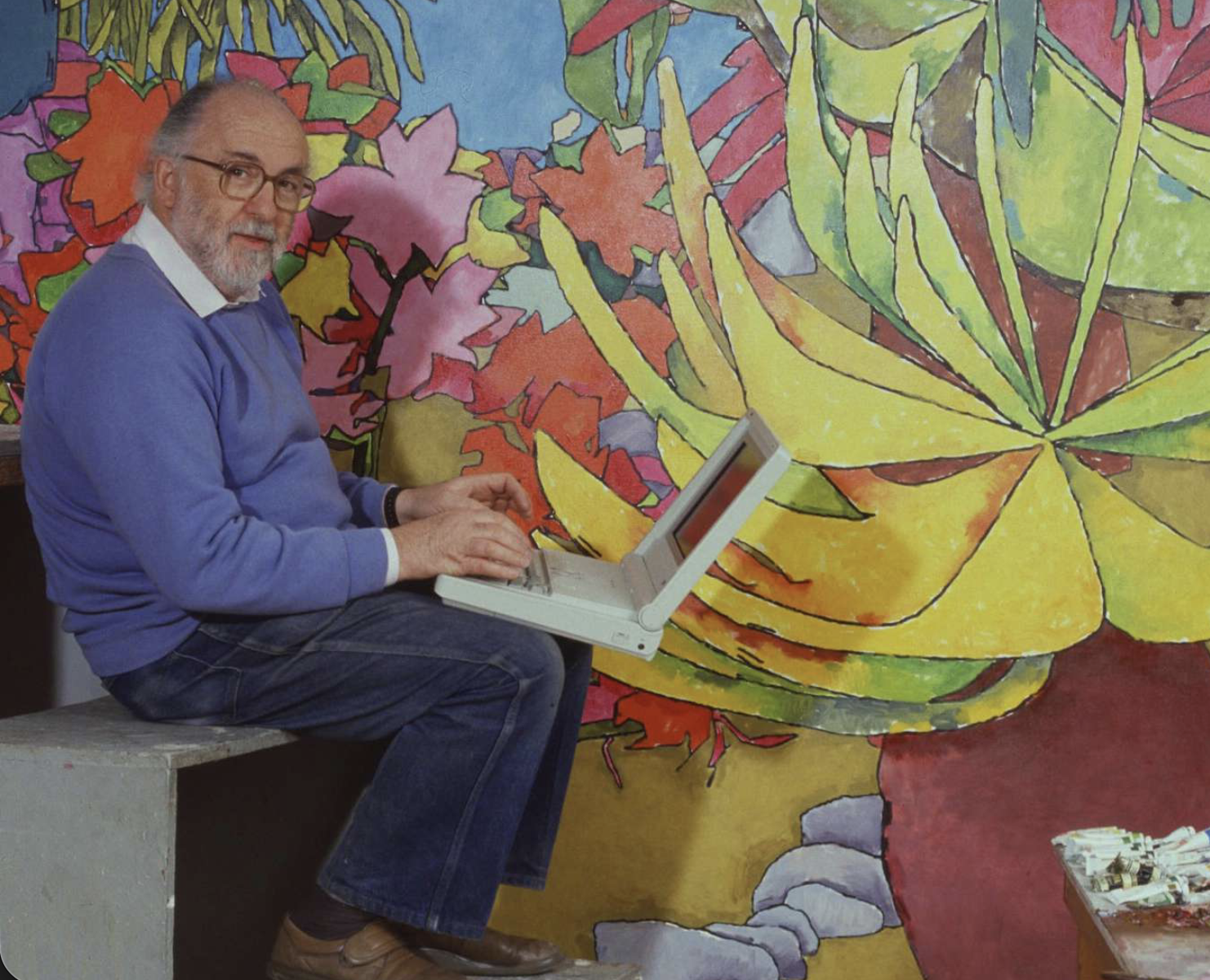
Gazelli Art House presented a solo exhibition at Art Basel Zero 10 dedicated to Harold Cohen (1928–2016), the British artist who, decades before “AI art” became a cultural flashpoint, was already building a machine that could make art on its own. That machine was AARON, one of the earliest autonomous artmaking systems ever created. The gallery chose Verisart to certify all the works at the booth with its blockchain certificates of authenticity.
Throughout his life Harold Cohen worked with computers teaching the program how to draw, compose, color and paint. Cohen started working on the code in the early 1970s, at a time when people didn’t have personal computers.
He didn’t use a model trained on billions of images. He was writing rules: rules for how a line moves, how forms relate to each other, how figures occupy space. Like a composer writing a score that the orchestra plays differently every time, Cohen defined the conditions through which art could emerge and then let the system run.

What makes Cohen’s practice so significant right now is that he never pretended this was simple. He spent decades wrestling with the question of authorship — who is the artist when the machine draws the line? His answer, typically precise: creativity lived in the dialogue between programmer and programme, in the intimate relationship that had built up between them over years. The answer lay not in one, not in the other nut in the conversation.
“Creativity — this particular example of creativity — lay in neither the programmer alone nor in the program alone, but in the dialog between program and programmer; a dialog resting upon the special and peculiarly intimate relationship that had grown up between us over the years.”
— HAROLD COHEN, DRIVING THE CREATIVE MACHINE (2010)
That conversation continued over four decades and produced work at every step - from the skeletal “freehand line” Maze drawings of the early 1970s, to the bold figurative oil paintings of the 1990s, to the “finger painting” works made on a 55-inch touchscreen in the final years of his life. AARON never stopped evolving. Neither did Cohen.
AARON’s outputs are, by nature, unrepeatable. Each drawing is generated by a system running live, governed by rules but not by instruction. No two works are identical. And yet, without a clear record of provenance — who made it, when, through what process — even the most historically significant work can become untethered from its own story.
That’s precisely the problem our certificates solve. Think of a Verisart certificate the way you’d think of the ledger entry in a rare book collection: it doesn’t change what the object is, but it makes the object’s history legible, permanent, and transferable.
For all the Harold Cohen works displayed at Art Basel, the gallery used Verisart’s highest certification standard, the Certificate of Authenticity Plus (COA+). Using Verisart’s patented certification, the COA+ assures collectors that the work is approved but the gallery, the artists or artist estate and carried a unique physical identifier attached to the work. In this case each work carried a NFC tag which is attached to the back of the work in can archival pocket with acid free adhesive so collectors can choose where they wish to place their tag.

The certificates also include additional images including the back of the work and detailed images.
View selected works in the Harold Cohen Art Basel Zero 10 collection or click on highlighted works below.

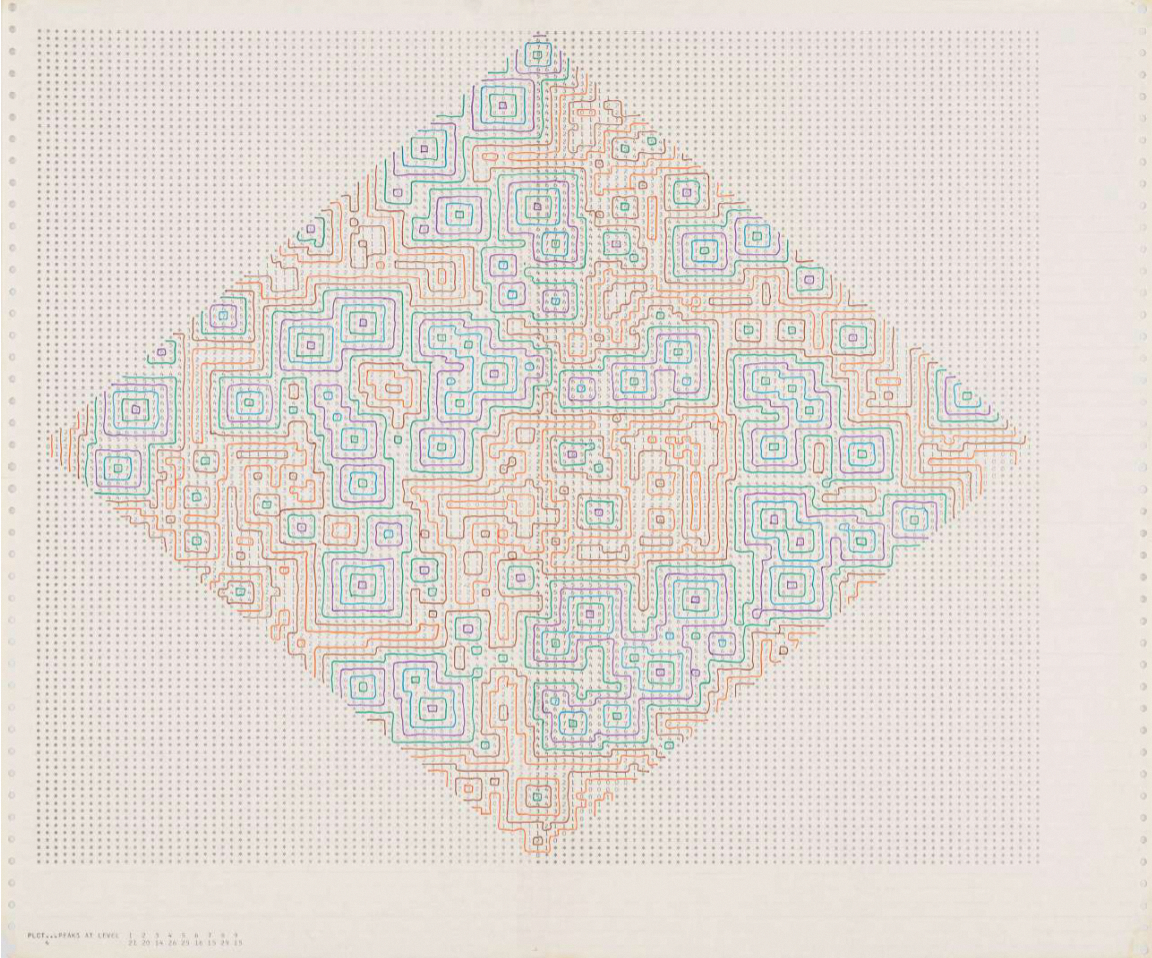
There are plotter drawings from the 1970s — the Maze series, the Territorial Maps, the Contour Maps — where Cohen was teaching himself FORTRAN and building his first drawing machines.
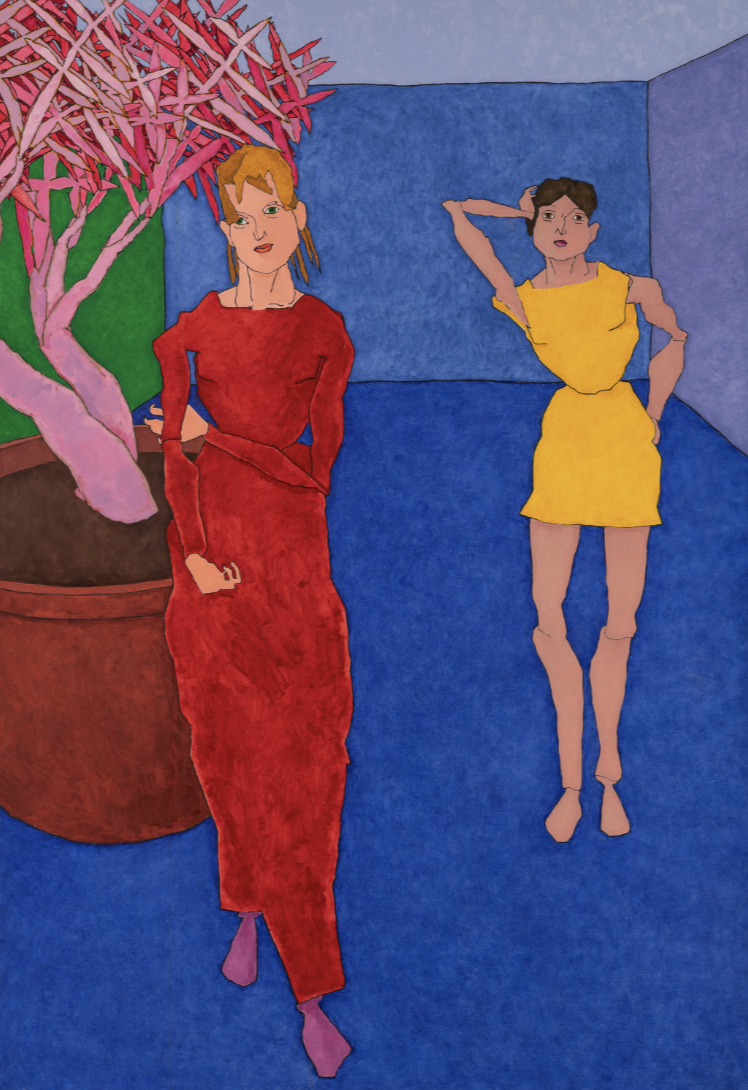
There are the vivid figurative works of the 1990s Painting Machine era, when AARON could not only generate compositions but physically apply colour through custom-built robotic hardware.

The studio practice of Harold Cohen was highly iterative, detailed and complex. Not only was their meticulous documentation of the code but the artist also built his own plotters and printers. If you get the chance to visit the estate in San Diego, you can still see his original blueprints for many of his iconic plotters.
The Harold Cohen Trust is tasked with the work of compiling all the works into a catalog raisonne and the blockchain certificates are an initial step towards this end goal. Each work sold by Gazelli Art House includes a blockchain COA or in some cases a NFT as the record of ownership. The certificates are designed to evolve over time including more data as collectors choose to add their own details to the work either as public or private notes.
The code, the machine, the print and the painting whether hand colored or painted by machine all form parts of the documentation around the certificate. For a work to be truly considered and attributed to the artist, the artist, the code and the selection of the work by the artists all need to be present. The blockchain certificates help collectors easily identify the provenance, creator details, medium and process together with serial numbered and tamper proof NFC tags or QR stickers helping to identify each physical work to its digital record.
Verisart is delighted to showcase these works on the historic occasion of his solo booth by Gazelli Art House at this year’s Art Basel Zero 10.

We’ve been using Verisart for several years and love the additional layer of trust it provides our collectors.


